
Written byStevenUpdated on Oct 10, 2026

Before we start: If the format of a NTFS hard drive is showing up as RAW, it means the file system is corrupted and the drive is inaccessible. how to convert it to NTFS again? You may need to reformat it directly. However, if there are important files on the drive, use Donemax Data Recovery to recover the files first.
PAGE CONTENT:
My hard drive has changed to RAW! Maybe not only the hard drive, but also your storage device may have somehow become RAW format. Worse still, your storage device or hard drive may have very important files or data stored on it, but RAW is not readable and writable by Windows/Mac. What should I do to solve it? If you don't want to format your storage device or partition, the best way is to convert RAW to NTFS. Read on, we will introduce 3 best ways to convert RAW to NTFS in detail.
The RAW stands for no file system, corrupted file system or unknown system in a hard drive partition or external storage device such as external hard drive, USB flash drive, memory card, etc. The RAW file system is not readable or writable. If your hard drive becomes RAW, you won't access the files stored on the hard drive. And if a hard drive is a RAW drive, it may show 0 byte in size or your computer will asks you to format it, initialize it.

Confirm if your hard drive or removable device is damaged
You can check your hard drive using the hard drive checker tool that comes with Windows. Open [Disk Management], find the hard drive you want to inspect, right-click it, and then select [Properties]. In the properties dialog box, switch to the [Tools] tab and click the [Check] button. Select [Check and Repair File System Errors] and you will be able to confirm if the disk has become RAW format.
Make a backup
Make a backup of the contents of the partition in RAW format on which you are going to perform the operation. This step is very important because performing any changes to the partition structure can be harmful to the data on the partition. You can recover data by making a backup of the RAW partition or by using hard drive recovery software hard drive.
You may have encountered such a situation where your external device or a partition suddenly becomes RAW and you have no idea what's going on. In fact, there are several for this situation:
For removable devices:
For disks:
NTFS is a logging file system, which means that in addition to writing information to the disk, the file system keeps a log of all changes that have occurred. This feature makes the NTFS file system easier to recover in the event of an error (such as a system crash or power supply interruption) without losing any data, so the file system is used on most hard disk devices.
When your hardware or removable device becomes RAW format, if you don't convert RAW to NTFS format, which is unreadable on windows system, you may lose your data. So what should we do before converting?
Before converting RAW drive to NTFS drive, you'd better recover all data from the RAW drive. Normally, formatting or erasing the RAW to NTFS will erase all data stored on the RAW drive. Before starting format or erasure, just use a data recovery application to recover all data from the RAW drive to your computer.
Step 1. Download and install the reliable data recovery program - Donemax Data Recovery. It will help you recover all lost data from a RAW drive.
Step 2. Open Donemax Data Recovery and connect the RAW drive to your computer. Select the RAW drive to start data recovery.
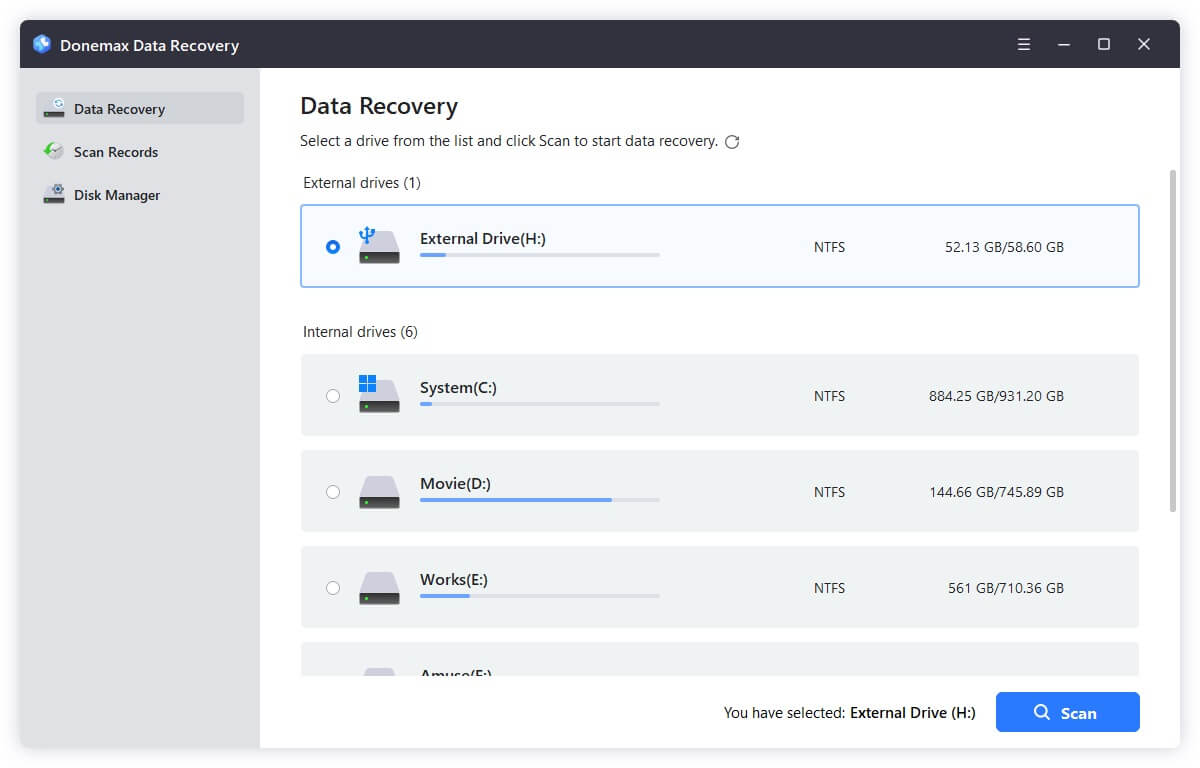
Step 3. Click on Scan button. This data recovery software will deeply scan the RAW drive, finding every recoverable file.
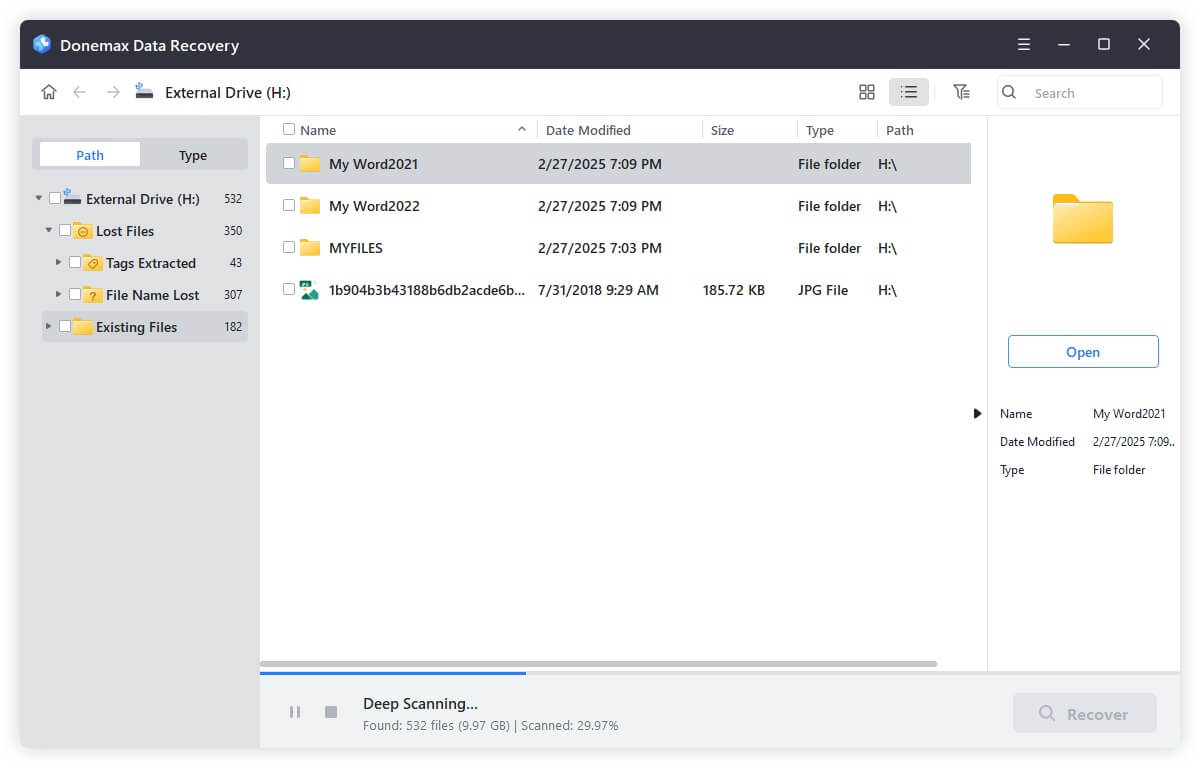
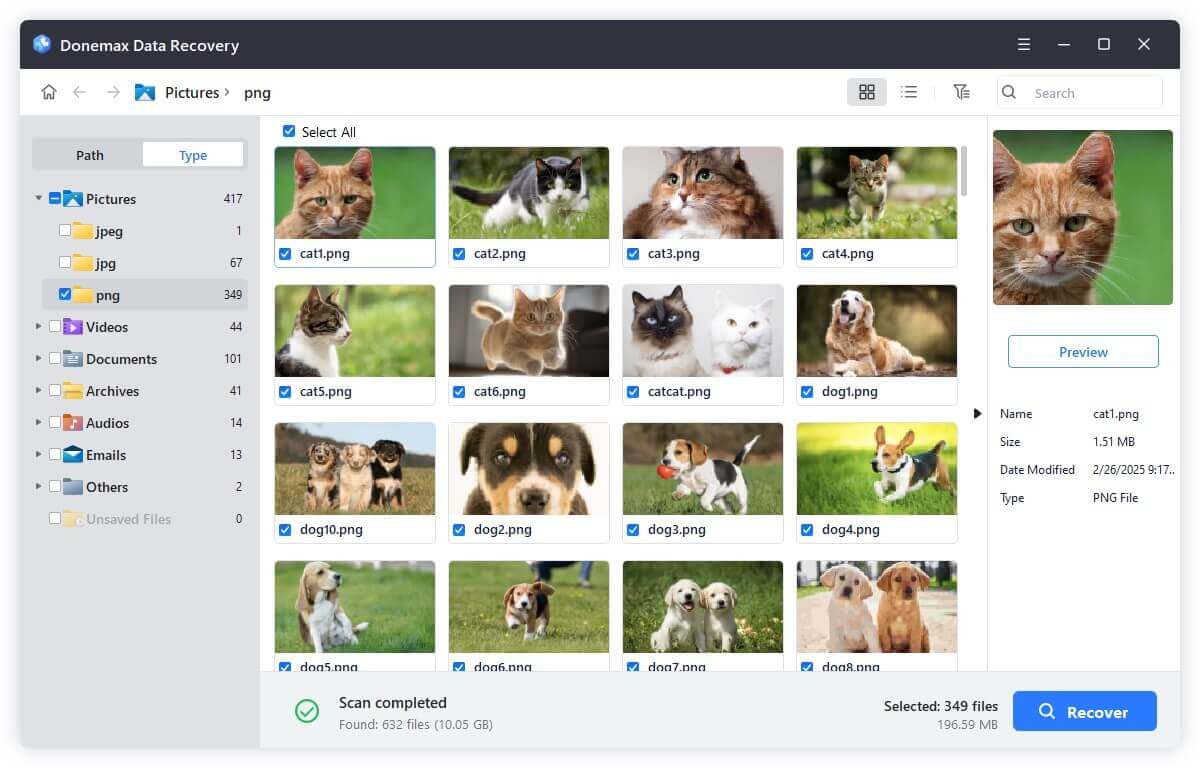
Step 4. Once the scan is completed, you can select the wanted files and save them to a safe location.
Step 1. Connect the drive to your Windows computer, then open This PC or My Computer.
Step 2. Find the RAW drive, right-click it.
Step 3. Choose Format. Select NTFS as the file system.
Step 4. Then follow the wizard to format the RAW to NTFS.

💡 Tip: If the RAW drive is not showing up in This PC, just open Disk Management, then select the RAW drive and choose Format.

Professional Windows users also can try to convert RAW to NTFS with CMD, here are the steps:
Step 1. Click Windows Start menu, enter and search for Command Prompt, and choose Run as administrator.
Step 2. Type convert X: /fs:ntfs and hit Enter. (X is driver letter)
Step 3. Enter the name of the drive and press Enter.
Download and install Donemax Data Eraser on your computer, then run it on your computer. It will recognize the RAW drive automatically. Select Disk Tool and then use it to format and convert the RAW drive to NTFS drive.
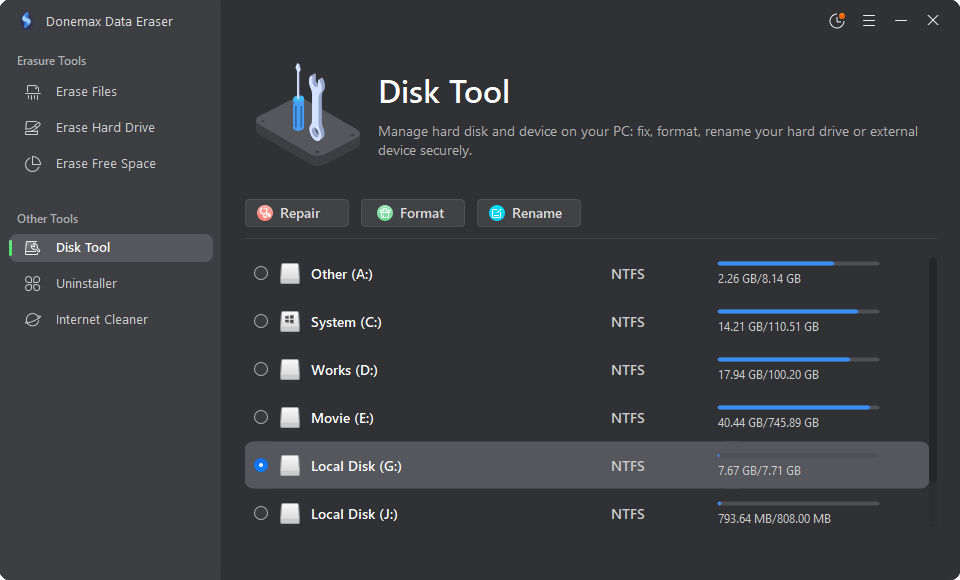
We introduce the above three methods to help you convert RAW to NTFS. However, using the formatting operation will cause all your data to be lost, so it is not recommended if your RAW files are important. In addition, using CMD command for the operation requires some computer knowledge, because your files may also be damaged or lost if the operation is wrong. If you have lost data due to converting RAW to NTFS, you can use Donemax Data Recovery to scan the formatted drive and get all lost files back.
How to convert RAW to NTFS without losing data? I think you already have the answer after reading this article. In most cases, formatting the RAW to NTFS is the best solution for common users. However, data loss will happen. It is recommended to recover all files stored on the RAW drive before you format it to NTFS. Donemax Data Recovery is an easy-to-use disk recovery tool and it can help you recover data from a RAW drive or a formatted drive.
Donemax Data Recovery
Powerful, safe & easy-to-use data recovery software. Easily and completely recover deleted, formatted, or other lost data. The tool supports PC, Mac, HDD, SSD, USB drive, camera, SD card, RAID and other storage devices.
Steven
Steven has been a senior writer & editor of Donemax software since 2020. He's a super nerd and can't imagine the life without a computer. Over 6 years of experience of writing technical solutions and software tesing, he is passionate about providing solutions and tips for Windows and Mac users.
Gerhard Chou
In order to effectively solve the problems for our customers, every article and troubleshooting solution published on our website has been strictly tested and practiced. Our editors love researching and using computers and testing software, and are willing to help computer users with their problems