
Written byStevenUpdated on Nov 26, 2025

Before we start: Donemax Data Recovery for Mac is reliable recovery software for macOS. It can recover deleted or lost data in any data loss case. The software support both Intel and new Apple Silicon Macs.
PAGE CONTENT:
For Mac users, if you want to recover lost data, there is a special situation. When you try to recover lost data from the internal system drive on Apple Silicon Mac, there would be some obstacles. Sometimes you may find it's impossible to scan the internal drive with a prompt window, or the found files are limited and none of the lost files listed.
It's because the security policy of macOS forbid the third-party recovery software scanning the system drive. If you want to bypass the issue and get back the missing files on Mac internal system drive, it's essential to load the necessary system extension to recover lost data.

In this article, we will guide you to load system extension to recover lost data on Apple Silicon Mac. You will know what system extension is, why and how to load it for data recovery. At last, you will get the detail instructions to recover lost files on Mac step by step.
A system extension is a piece of software made by a third-party developer (not Apple) that extends the capabilities of your macOS at a deep system level. It's the modern, more secure replacement for what used to be called kernel extensions (or kexts).
Think of it as a specialized, trusted contractor that macOS allows to work inside its highly secure "control room" to perform specific, critical tasks that regular apps can't do.
Donemax Data Recovery for Mac is a reliable data recovery software to recover lost files on Mac. It can recover deleted or lost files in different data loss scenarios, like formatting drive, partition loss, file system corruption, system crash, etc.
If you are using Donemax Data Recovery for Mac to retrieve the lost files on a Mac with Apple Silicon Chip, you will receive a prompted message like below:

In order to obtain the authorization to scan and retrieve the lost data on an internal drive, Donemax Data Recovery for Mac requires the system extension to be enabled on your Mac.
In other words, if you don't load the necessary system extension for Mac, you cannot fully recover the deleted or lost files from the Mac internal system drive.
To load the system extension to recover data on Apple Silicon Mac, you will need to get into the Mac Recovery mode first to reduce the security policy first. Then restart the Mac and try to allow the system to load the system extension for data recovery. Here we will show you the steps:
On all the Macs with Apple Silicon Chip, you will need to go to the Recovery mode environment to enable system extensions.
Step 1. Save all the works on your Mac and shut down the system. Then press and hold the Power button until you see the Option s icon appears on the screen. Select it and click Continue.

Step 2. After this, you might need to select your Apple account and fill in the password to boot in Recovery mode. You will then get the following menu.

Step 3. Click on Utilities from the menu bar. Next select Startup Security Utilities.

Step 4. Select the drive where Donemax Data Recovery for Mac is supposed to be installed, generally it should be the Macintosh HD. Click the Security Policy button.

Step 5. In the prompted window, the Reduced Security setting needs to be selected. Then check the allow user management of kernel extensions from identified developers. Click O K to save your new startup settings. Then restart your machine.

After your Mac restarts, do as follows to allow and load the system extension offered by the Donemax software.
Step 1. Run Donemax Data Recovery for Mac again and select the Mac system drive to scan. The System Extension related popup window will appear.
Step 2. Click Open System Settings button to continue. The Privacy & Security page will be prompted automatically. If the prompt page is not appeared, manually navigate to this page in System Settings (or System Preferences).
Step 3. Click the Allow button to accept the system extensions of Donemax Data Recovery for Mac. The name is "Chengdu Shengxuan Technology Co., Ltd."

Another restart of the machine will be required after the last change. After restarting your Mac, you will be able to use the product to retrieve the lost files from the internal drive on your Apple Silicon Mac.
💡 Tips: The process is only necessary for Mac internal system drive scanning. If you are trying to recover data from an external hard drive, USB flash drive, or memory card, you don't need to load the system extension for data recovery.
After allowing and loading the system extension of the software Donemax Data Recovery for Mac, you can then try to recover deleted or lost files from the internal system drive on Apple Silicon Mac.
Here are the steps to do the data recovery with the recovery software:
Step 1. Run the software Donemax Data Recovery for Mac and it will list all the connect drives. Check and select the Mac drive where you lost files.
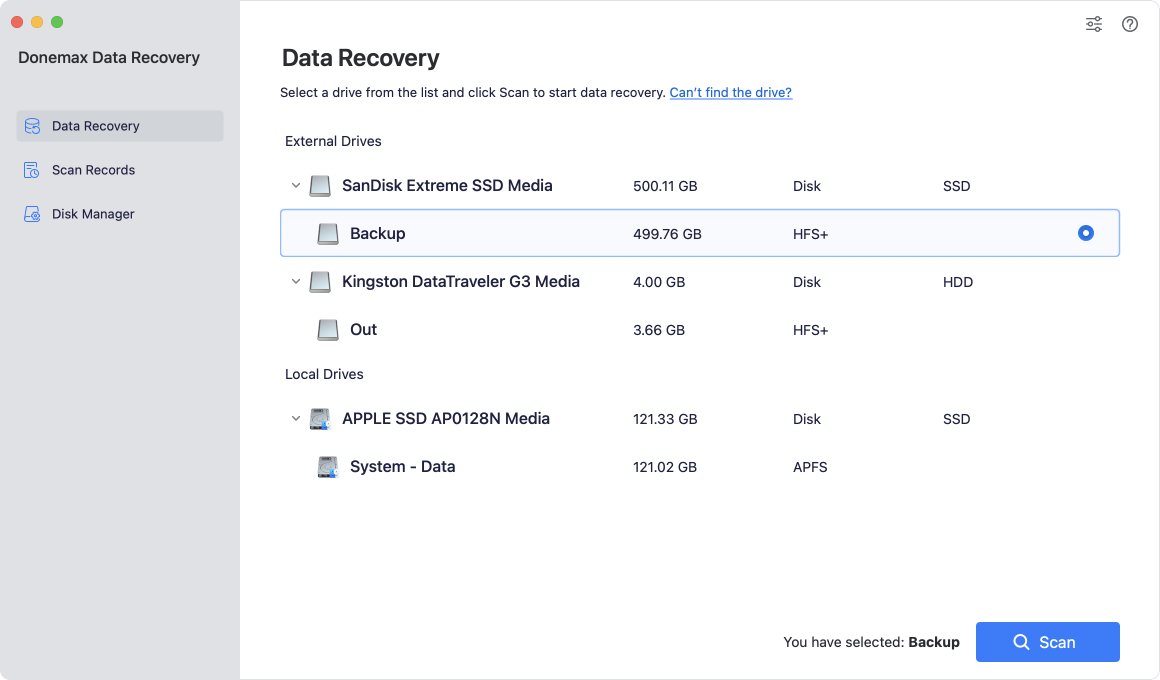
Step 2. Click the Scan button to search for the missing files on the drive. The software will automatically run a deep scan to find any possible lost data.
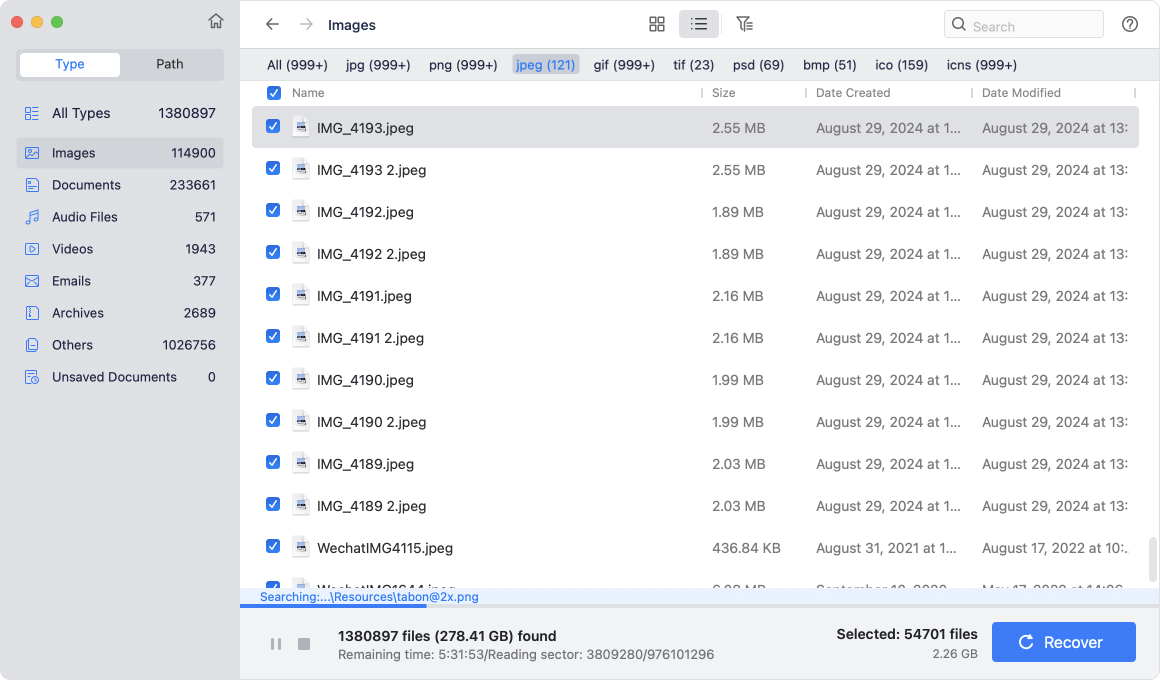
Step 3. Check and locate the deleted or lost files once the scanning process is completed. You can locate the files by date, type, size, etc. Before you recovering files, you can also preview the files to confirm if they are recoverable. At last, select the wanted and recoverable files and click the Recover button, choose an external hard drive to save the recovered files.

To successfully recover data on Mac, here are some tips for users:
To avoid data recovery on Mac, it's better to back up your Mac regularly using Time Machine or other backup tools. Check twice before you delete files or format a drive. When you try to unplug an external devices, ensure to safely eject it first. When editing document or other data, it's a good habit saving it frequently.
If data loss happened somehow on Mac, don't worry and immediately recover the data with Donemax Data Recovery for Mac. Note that when recovering data from the internal Mac system disk, there is another additional task to do. You need to load the system extension to recover data on macOS. Follow the guide step by step to load the system extension rightly and then successfully get back the missing files on Apple Silicon Mac.
Donemax Data Recovery for Mac
Donemax Data Recovery for Mac is one of the best Mac data recovery software. It is easy-to-use and can help in recovering deleted, formatted, inaccessible or lost data from Mac HDD/SSD, external disk, USB drive, SD card, camera or other storage devices.
Steven
Steven has been a senior writer & editor of Donemax software since 2020. He's a super nerd and can't imagine the life without a computer. Over 6 years of experience of writing technical solutions and software tesing, he is passionate about providing solutions and tips for Windows and Mac users.
Gerhard Chou
In order to effectively solve the problems for our customers, every article and troubleshooting solution published on our website has been strictly tested and practiced. Our editors love researching and using computers and testing software, and are willing to help computer users with their problems