
Written byStevenUpdated on Nov 13, 2025

Before we start: Donemax Data Recovery for Mac is a reliable recovery software for macOS. It can recover Excel and other files in any case if you didn't back up the data before. With the software, you can effectively recover the missing files within only a few clicks.
PAGE CONTENT:
Excel files on Mac would be deleted wrongly when losing mouse focus sometimes, or the Excel files were deleted by mistake when you remove an entire folder, and also you would delete the Excel files before the backup/transfer was done.

Excel files would also be lost due to hard drive corruption, file system damage, partition loss, formatting drive, system upgrade, close Excel documents without saving them, Excel application crash while editing Excel files, power outage issues, and so on.
Fortunately, it's simple to learn how to recover unsaved or deleted Excel files on Mac. There are some reliable solutions to help you get back the deleted, lost, or unsaved Excel files easily.
It's very confusing to lose Excel files on Mac. If you cannot get back the lost Excel files, you will have to redo the work from the beginning. So I suggest you have a try with the following methods to recover the deleted/unsaved excel files on Mac.
The files option is to restore the deleted Excel files from Trash. Mostly, the deleted files will be put into the Trash first. If you haven't emptied the Trash or the Excel files were not deleted by option + Command + Delete keys, you can easily restore the deleted Excel files from Trash.
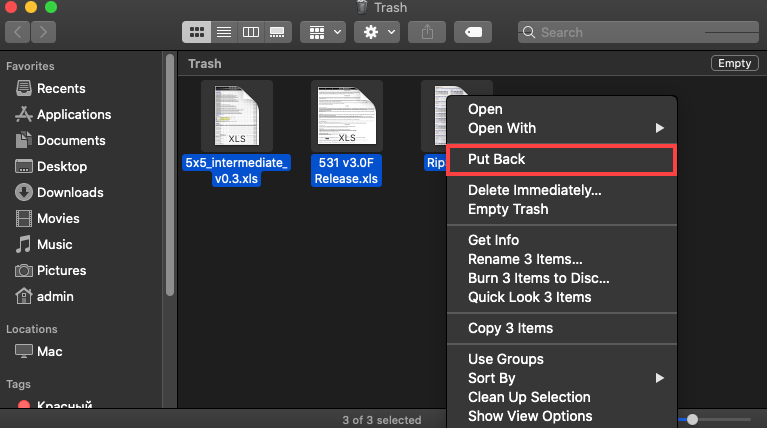
Step 1. Open Trash in Dock of the system.

Step 2. Check and find the deleted Excel files, right-click and choose "Put Back". Then the deleted Excel files will be restored to the original location. You can also manually drag the files from Trash and put them in any other location.
After emptying the Trash or the Excel files were deleted with option + Command + Delete keys, the Excel files will not be found in Trash anymore. How to recover the deleted Excel files in such a case? Also, you may lose Excel or other files on Mac due to other issues, like formatting the drive, repartition the drive, you also want to recover the lost Excel files urgently.
To help you easily recover deleted or lost Excel files on Mac, we recommend Donemax Data Recovery for Mac. This software can recover deleted/lost Excel files or any other files on Mac. You can download the free trial version to have a try.
After downloading and installing the data recovery software on the Mac, please then do as follows to recover deleted/lost Excel files on Mac step by step.
Step 1. Run the software and choose the drive where you deleted/lost Excel files.
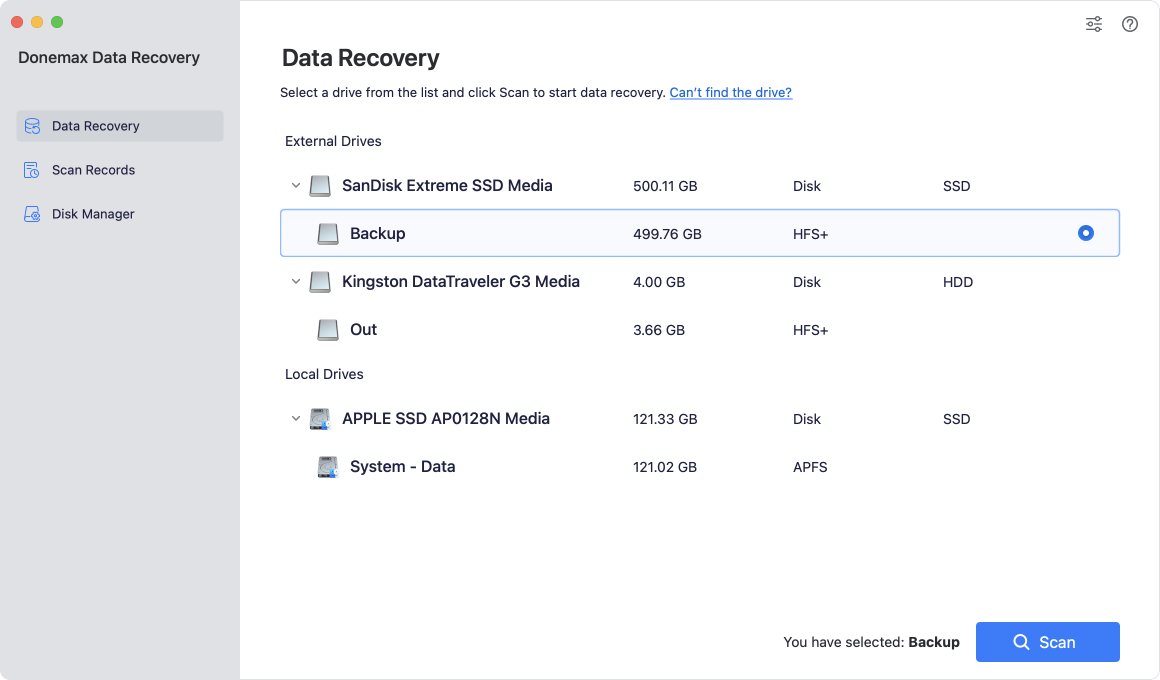
Step 2. Click the Scan button and the software will automatically start the scanning process.
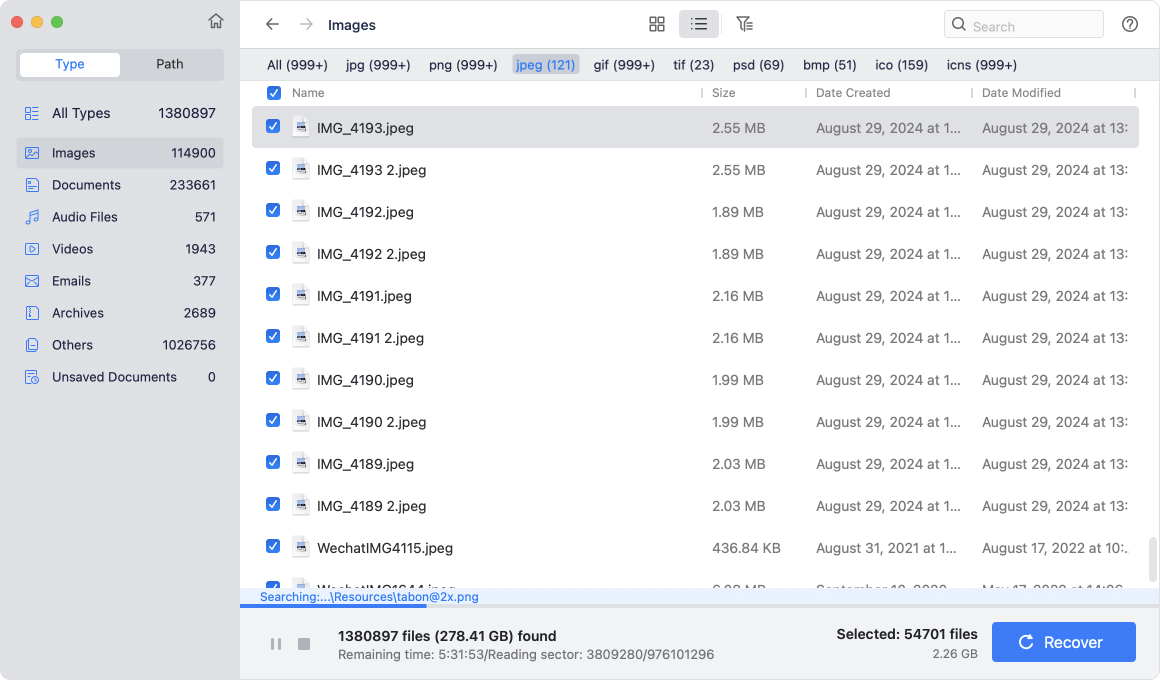
Step 3. After some time, you will find the deleted/lost Excel files after the scan is done. You can then check the files and choose the wanted ones to recover. You need to save the recovered files to another drive.

The software Donemax Data Recovery for Mac is reliable to recover data in any case, like deleting, formatting, system crash, file system damage, partition loss, etc. It can recover lost data from the Mac internal drive, external hard drive, USB flash drive, memory card, and other storage media.
If you ever backed up your important Excel files with Time Machine, then it's fortunate. You can try to restore the wanted Excel files from the Time Machine backup directly.
Step 1. Connect the backup disk to the Mac and run Time Machine.
Step 2. You will see the backups you created. You can check the files by date and choose a proper backup that contains the deleted/lost Excel files.
Step 3. Click the Restore button to restore the selected Excel files.

The above methods can only be used to recover the deleted/lost Excel files. However, if you lost an Excel document on Mac without saving it, the case is different. You are not able to recover the unsaved Excel files with these solutions.
An Excel file would be missing if you close it without saving it. Sudden power off, app crash, or other issues may cause the issue. Then if it's able to recover the unsaved Excel documents?
Thanks to the AutoRecover option, there is a chance to recover the unsaved Excel files on Mac.
Step 1. Open Finder, click Go from the top menubar of the Finder → Go To Folder.

Step 2. Enter the following path:
/Users/username/Library/Containers/com.microsoft.Excel/Data/Library/Application Support/Microsoft
🪧 Note: Make sure to replace "username" with your actual username.
Step 3. Go to the folder and check all the recent Excel files. If you find the wanted files, please copy and move the files to another location.
The Mac system or the applications on the computer will store some temp data in a specific folder. If you closing an Excel file, you can try to open the temp folder to check if you can, fortunately, find the file.
Step 1. Please open Finder → Applications → Utilities → Terminal.
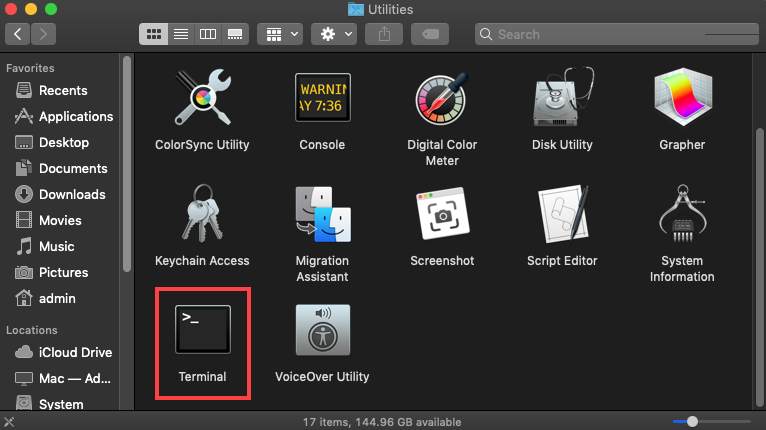
Step 2. Type "open $TMPDIR" and then you will get into the temp data folder.
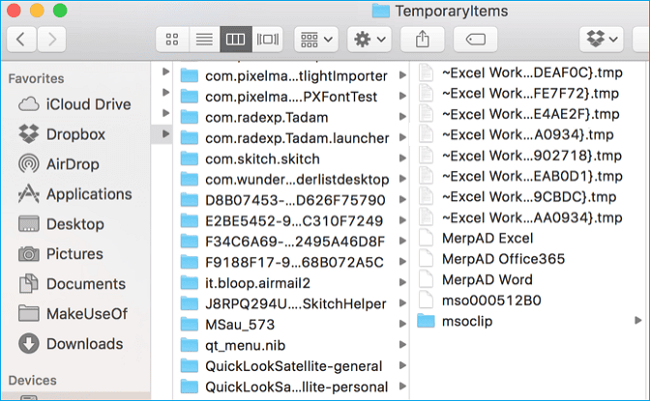
Step 3. Check and find the wanted temp data based on the time date. The unsaved Excel file will be named begin with '~Excel Work File'. Find the required Excel file and restore it. You can copy the temp data file to another location first. Then change the extension to xls/xlsx. Then you can try to open the file directly.
It's not always 100% successful to get back the missing files. So it's better to take actions before data loss to keep your files safe on Mac. These are the conscious actions you should take every time you work with Excel on Mac.
1. Save Early, Save Often, and Use "Save As":
Get in the habit of pressing Cmd + S (Save) constantly—after every major change. Use File → Save As... (Shift + Cmd + S) to create versioned copies of your file.
For example, File_v1.xlsx, File_v2.xlsx. This way, if you make a mistake, you can always go back to a previous version.
2. Close Excel Properly:
Always close Excel using Excel > Quit Excel or Cmd + Q. If you have unsaved work, Excel will prompt you to save. Force-quitting the app (e.g., via Force Quit menu) can sometimes lead to lost data.
3. Enable Time Machine (Your Ultimate Safety Net)
This is the single most effective way to prevent any file loss on a Mac. It automatically backs up your entire Mac—including every version of every Excel file—to an external hard drive.
4. Use iCloud Drive for Documents
iCloud Drive is your safest bet. Files saved here are automatically synced across all your Apple devices and, crucially, are backed up by Apple. If your Mac fails, your files are safe in the cloud. This provides a real-time, off-site backup. How to enable it:
5. Configure Excel's AutoRecover Settings
Don't rely solely on this, but make sure it's properly configured as a secondary layer. Here is how:
To make sure the unsaved Excel files could be recovered easily, please check and ensure the AutoRecover option is enabled. Also, it's essential to enable sync or backup for your Mac and files on Mac. It's the most safe way to keep your data secure. When deleting files, be careful and check twice before the data deletion.
If the Excel files are deleted or lost due to any other issues, you can try Donemax Data Recovery for Mac to get back your lost files immediately. The software can mostly get back the deleted, missing, or unsaved Excel and other files successfully.
Donemax Data Recovery for Mac
Donemax Data Recovery for Mac is one of the best Mac data recovery software. It is easy-to-use and can help in recovering deleted, formatted, inaccessible or lost data from Mac HDD/SSD, external disk, USB drive, SD card, camera or other storage devices.
Steven
Steven has been a senior writer & editor of Donemax software since 2020. He's a super nerd and can't imagine the life without a computer. Over 6 years of experience of writing technical solutions and software tesing, he is passionate about providing solutions and tips for Windows and Mac users.
Gerhard Chou
In order to effectively solve the problems for our customers, every article and troubleshooting solution published on our website has been strictly tested and practiced. Our editors love researching and using computers and testing software, and are willing to help computer users with their problems